
This recipe has been adapted from a German recipe I found on the web. See below for details.
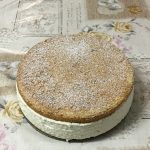
Cheese Cream Cake (Käsesahnetorte)
Equipment
- Scale (if weighing ingredients)
- Mixing bowl(s), spoon and/or spatula
- Egg beater, immersion beater, and/or food processor
- Sieve
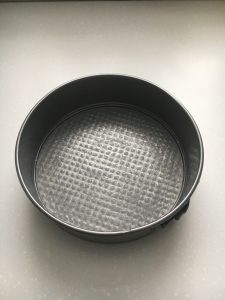
- 9" spring-form pan
- Toothpick (or equivalent)
- Long knife (to facilitate horizontal slicing of cake)
- Parchment paper (or substitute)
- Palette knife (or similar)
- Grater
- Lemon squeezer (optional)
- Plastic wrap (if required)
Ingredients
Cake layer
- 4 eggs
- 150 g sugar
- 1 pkg vanilla sugar
- 70 g flour
- 70 g cornstarch
- 4 tsp baking powder
- butter to grease the pan
Filling
- 8 sheets gelatine or 3 packets (Knox Gelatine)
- 473 ml whipping cream
- 750 g quark low fat if available
- 1 lemon
- 50 g icing sugar
- icing sugar to sprinkle on top
Instructions
Preheat
- Preheat oven to 180℃/350℉ (160℃/320℉ for convection).
Sponge cake (ca. 25 min preparation, 35 min baking, cooling time)
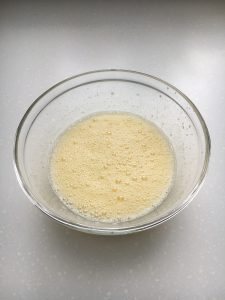
- Beat the eggs, sugar, and vanilla sugar in a suitable bowl for 3–5 minutes or until thick and creamy. Note: Stop once the mixture has thickened, lest the cake run the risk of collapsing during baking.

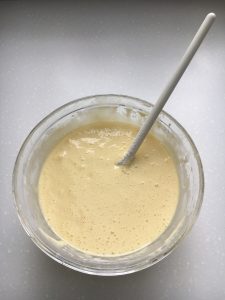
- Mix flour, cornstarch, and baking powder iand gradually sift into the egg mixture while folding carefully with a spoon or spatula.
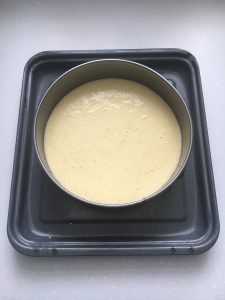
- Grease the bottom and walls of the spring-form pan, then pour in the mixture and level it with the spatula.
- Bake for approximately 35 minutes or until a toothpick comes out clean. Note: 1) I have the spring-form pan sitting inside another pan just in the event that it leaks at the base. 2) Ovens vary; inspect periodically the first time around. 3) At your option, you may continue with "Preparing the gelatine" and following if you wish to save elapsed time.
- Leave to cool completely before continuing.
Halving the cake (5 min)
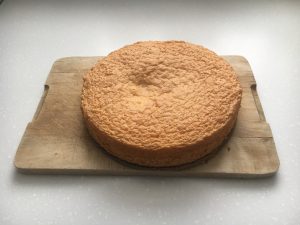
- Release the cake from the spring-form pan and carefully transfer it to another surface such as a breadboard.

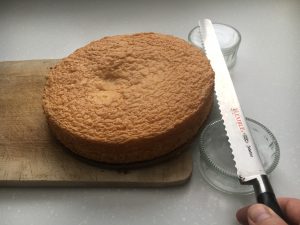
- Carefully slice the cake in half horizontally (using a blade which is longer than the diameter of the pan is ideal). To maintain an even height, the blade can be supported on either side of the cake by means of a support of some kind.
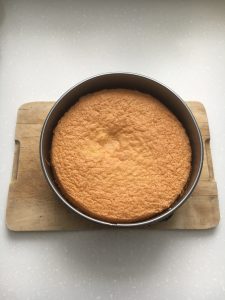
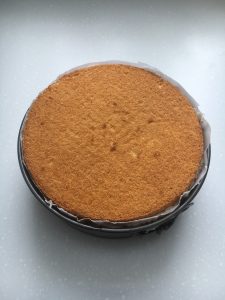
- Reassemble the spring-form pan, and place the top half of the cake back into the spring-form pan with the more flat side facing down. This will ensure that any unevenness in the top crust will end up inside the cake rather than be visible on the top. Lay the bottom half aside for the time being.
- Line the spring form pan with parchament paper or the like. A palette knife or similar can be helpful in getting the paper down the sides of the cake which is in the pan; this holds it in place.
Preparing the gelatine (time varies)
- The procedure for preparing the gelatine varies depending upon the product. Follow the directions on the package. I have found the use of an immersion beater helpful here to ensure that no lumps remain, but again, this will depend upon the type of product used.
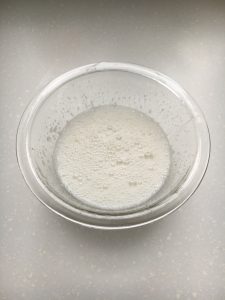
Preparing the cream and quark mixtures (10–15 min)
- Whip the cream until it forms stiff peaks; set aside. A food processor with suitable attachment works well when lacking an egg beater.
- Grate the lemon rind into a bowl, then extract the juice; a lemon squeezer is helpful but not essential.
- Mix rind, juice, and icing sugar with the quark in a suitably large bowl (so as to be able to accommodate the whipped cream) and stir until homogeneous.
- Mix the dissolved gelatine, however prepared, into the quark mixture and stir until homogeneous.
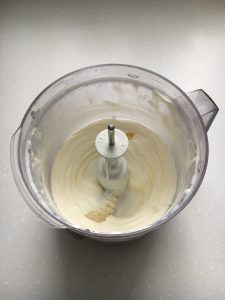
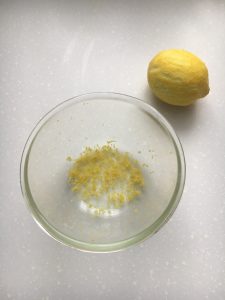
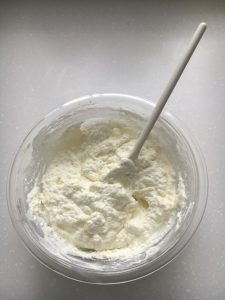
Preparing the filling (ca. 5 min)
- Carefully fold the whipping cream into the quark mixture. Once the mixture is homogeneous, carefully spoon into the spring-form pan over the cake layer. Note: Do not overfill: there must be sufficient room for the other half of the cake to be placed on top.
Completing the cake (ca. 5 min plus chilling time)
- Take the bottom half of the cake and carefully invert it before placing it into the spring-form pan on top of the filling; the former bottom of the cake, which is flat, will now be on top.
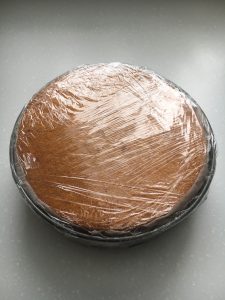
- Place the pan into the refridgerator for a minimum of 2 hours to give the filling a chance to set. Note: If the cake will be kept any length of time before serving, you may consider wrapping it in plastic wrap to prevent it from drying out.
Setting and serving (ca. 5 min)
- Once the filling is certain to have set—it doesn't hurt to allow extra time, just in case—the outer ring can be removed. Keep the cake cool until it is time to serve it.
- Sift a small quantity of icing sugar over the top of the cake so as to end up with a pleasing sprinkle pattern. Cut into slices as desired.
Notes
- The quantities of whipping cream and quark correspond to what is conveniently available in my area and yield a taste which is sufficiently close to my recollection. Feel free to adapt further, however!
- The preparation and cooking times given at the head of the recipe reflect my personal experience with my quantities and my equipment. This may vary in your situation.
- I took the option of continuing with the recipe while the cake was baking in order to save elapsed time. As it happens, I had everything else done before the cake finished baking (this took 35 min rather than the 20 suggested in the original recipe). I was concerned that the quark/cream mixture might begin to set by the time the cake had cooled, but this did not happen. If you are concerned about this possibility, then simply follow the recipe steps without deviating and do something else while you’re waiting 😉
Change history
1 January 2020
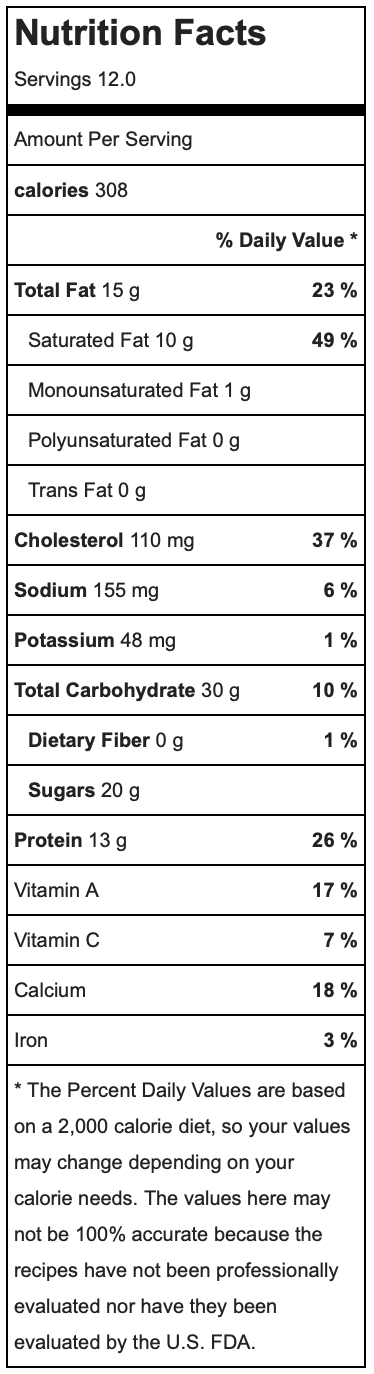
I used 473 ml of whipping cream and 2 tubs of Liberté quark @ 375 g each in an attempt to make the filling lighter and slightly less cheesy.
17 December 2019
Original adaptation of the recipe. I used 473 ml of whipping cream and 3 tubs of Liberté quark @ 375 g each as a first approximation to the critical ingredients.
I found the filling a little heavy and cheesy compared to what I remember from my youth so I will try it with 2 tubs next time. The result was similar with another recipe some years ago, so I think the quark available here must be heavier than what they use in Bavaria.
I also made the mistake of soaking the gelatine in cold water when the instructions on this product call for boiling water. Otherwise, the result was very good.