
This recipe has been adapted from a German recipe I found on the web. See below for details.
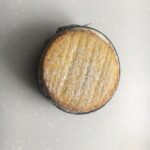
Mini Bavarian Cheese Cream Cakes
This is an adaptation of the regular recipe on this site to make 4 4" cakes rather than one 9" one, and with a substitution for quark, which I've not been able to find lately.
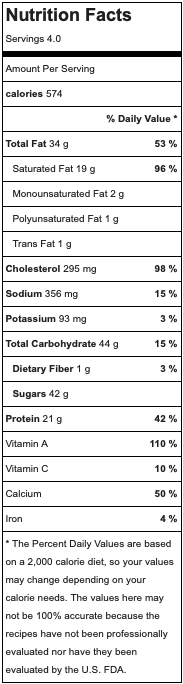
Servings: 4 cakes
Calories: 574kcal
Cost: $10
Equipment
- Scale to weigh ingredients
- Mixing bowl(s), spoon and/or spatula
- Egg beater, immersion beater, and/or food processor
- Sieve
- 4x 4" spring-form pans
- Toothpick (or equivalent)
- Knife (long enough to cut the cake horizontally)
- Parchment paper (if desired; see below)
- Palette knife (or similar)
- Grater
- Lemon squeezer
- Plastic wrap (if required to keep cakes fresh)
Ingredients
Cake layer
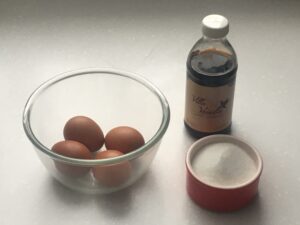
- 4 eggs (ca. 185g)
- 110 g granulated sugar
- ¾ tsp vanilla extract (or 1 packet of vanilla sugar, if available)
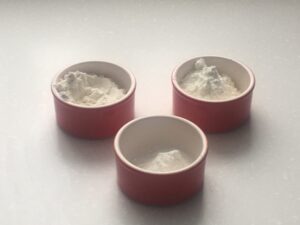
- 50 g flour
- 50 g cornstarch
- 3 tsp baking powder
- butter to grease the pan (alternatively, parchment paper)
- icing sugar to sprinkle on the finished cake
Filling
- 2 packets Knox gelatine (or 5 sheets)
- 350 ml whipping cream
- 350 g Greek yoghurt (see notes for alternatives; quark is original)
- ¾ lemon
- 35 g icing sugar
Instructions
Preheat
- If you wish, preheat oven to 180℃/350℉ (180℃/350℉ for convection); you can also put the cake into a cold oven, simply adjust the time accordingly.
Sponge cake (ca. 25 min preparation, 30 min baking, plus cooling time)
- Beat the eggs, sugar, and vanilla (or vanilla sugar) in a bowl for 3–5 minutes or until thick and creamy. Note: Stop once the mixture has thickened, let the cake run the risk of collapsing during baking.

- Mix flour, cornstarch, and baking powder and gradually sift into the egg mixture while folding carefully using spoon or spatula.
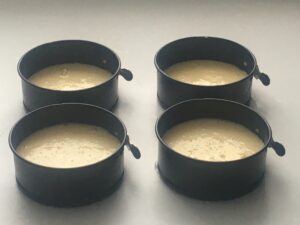
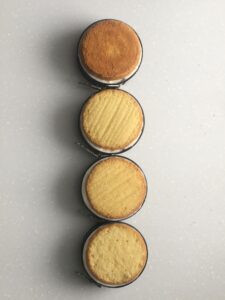
- Grease the bottom and walls of the spring-form pans well, then pour the mixture into the pans in equal parts and level each carefully. Alternatively, parchment paper can be laid in the bottom of each pan, or even placed on each pan bottom prior to affixing the circular walls.
- Bake for ca. 30 minutes or until a toothpick comes out clean. Note: I recommend monitoriing this the first time around, since ovens vary. You certainly don't want it undercooked, but on the other hand, overcooking will make the texture too firm.
Halving the cake (5 min)
- Although the procedure is described here, you may choose to continue with gelatine and/or filling while the cake is baking in order to save time. Only keep in mind that the cake should be cool before you put the filling between the cake halves.
- If necessary, insert a softish utensil between the pan walls and the cake and make a circuit to ensure that cake and pan walls separate without difficulty.
- Release the spring-forms, remove them, and place them aside for the time being.
- Carefully slice each cake horizontally in such a fashion that each half has about half the purely vertical portion of the cake. (In other words, ignore the curved top surface in the assessment.)
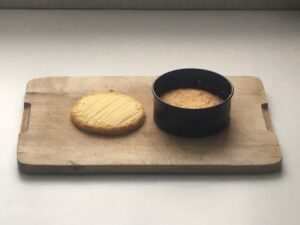
- For each pan, remove the cake bottoms and place the cake tops in their place, flat side down, so that the curved surface faces the centre of the finished cake. The bottoms will in each case be inverted at a later stage so that the original bottom becomes the top of the cake and the cut portion faces the centre.
Preparing the gelatine (time varies)
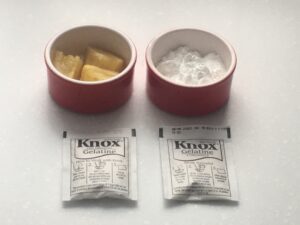
- The procedure for preparing the gelatine varies depending upon the product; follow the directions on the packet. Don't economize too much on the water, else the result may be lumpy; on the other hand, don't overdo it, either, lest the filling become diluted. You may find the use of a beater helpful.
Preparing the cream and the yoghurt mixture (10–15 min)
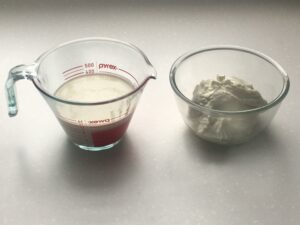
- Whip the cream until relatively stiff; don't overdo it, you don't want butter chunks! I've found a food processor implement to work marvels here in lieu of an egg beater. However you do it, you will want the whipped cream in a sufficiently big bowl that you can fold in the yoghurt mixture you will make shortly.
- Grate the lemon rind into a small bowl and squeeze the juice from the lemon into it. If you used a food processor in the previous step, you can put this in it once you've removed the whipped cream.
- Add the icing sugar and the yoghurt and mix well.
- Add in the dissolved gelatine, however prepared, and mix the whole until homogeneous.
Preparing the combined filling (5 min)
- Carefully fold the yoghurt mixture into the whipped cream, a bit at a time so as not to burst the air bubbles in the whipped cream as much as possible, as they contribute to the light texture.
Assembling the cake (5 min)
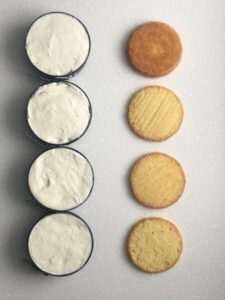
- Carefully distribute the yoghurt/cream mixture into each of the spring-form pans and level. It's ok to come near the top rim of the pan, since the top cake layer can sit on top, though a bit of a lip is certainly helpful to keeping things properly lined up!

- Take the bottom half of each cake, invert as described above if you haven't already, and place atop its corresponding bottom-with-filling. If you've done it properly, the bottom of each pan will have a horizontally cut surface and the top of each cake will show the original bottom of the cake.
Completing the cake (2 hours+)
- Sprinkle the tops of the cakes with a bit of icing sugar to give a dusted effect. A sieve works nicely here.
- Place the cakes into the refrigerator for about 2 hours to allow the gelantive to set. Note: if you don't plan to eat the cakes shortly after they are ready, consider wrapping in plastic wrap to keep them from drying out.
- Keep the cakes cool until it is time to serve them.
Notes
The original recipe calls for quark, which I used to buy at a local Loblaws-affiliated store. However, I have not been able to find any lately, so have been forced to substitute. In my view, Greek yoghurt performed the best, so I’ve used it in the recipe above), followed by skyr and finally a mixture of ricotta cheese and sour cream in 2:1 ratio. But be your own judge!
References
7910634
{5462604:LCGDJ5CT}
1
chicago-fullnote-bibliography
50
default
1356
https://karljurgen.feuerherm.ca/wp-content/plugins/zotpress/
%7B%22status%22%3A%22success%22%2C%22updateneeded%22%3Afalse%2C%22instance%22%3Afalse%2C%22meta%22%3A%7B%22request_last%22%3A0%2C%22request_next%22%3A0%2C%22used_cache%22%3Atrue%7D%2C%22data%22%3A%5B%7B%22key%22%3A%22LCGDJ5CT%22%2C%22library%22%3A%7B%22id%22%3A5462604%7D%2C%22meta%22%3A%7B%22numChildren%22%3A1%7D%2C%22bib%22%3A%22%26lt%3Bdiv%20class%3D%26quot%3Bcsl-bib-body%26quot%3B%20style%3D%26quot%3Bline-height%3A%201.35%3B%20padding-left%3A%201em%3B%20text-indent%3A-1em%3B%26quot%3B%26gt%3B%5Cn%20%20%26lt%3Bdiv%20class%3D%26quot%3Bcsl-entry%26quot%3B%26gt%3B%26%23x201C%3BK%26%23xE4%3Bse-Sahne-Torte%20-%20Oma%26%23x2019%3Bs%20Klassiker-Rezept%20%7C%20Einfach%20Backen.%26%23x201D%3B%20Accessed%20December%2031%2C%202019.%20%26lt%3Ba%20class%3D%26%23039%3Bzp-ItemURL%26%23039%3B%20href%3D%26%23039%3Bhttps%3A%5C%2F%5C%2Fwww.einfachbacken.de%5C%2Frezepte%5C%2Fkaese-sahne-torte-omas-klassiker-rezept%26%23039%3B%26gt%3Bhttps%3A%5C%2F%5C%2Fwww.einfachbacken.de%5C%2Frezepte%5C%2Fkaese-sahne-torte-omas-klassiker-rezept%26lt%3B%5C%2Fa%26gt%3B.%26lt%3B%5C%2Fdiv%26gt%3B%5Cn%26lt%3B%5C%2Fdiv%26gt%3B%22%2C%22data%22%3A%7B%22itemType%22%3A%22webpage%22%2C%22title%22%3A%22K%5Cu00e4se-Sahne-Torte%20-%20Oma%27s%20Klassiker-Rezept%20%7C%20Einfach%20Backen%22%2C%22creators%22%3A%5B%5D%2C%22abstractNote%22%3A%22%22%2C%22date%22%3A%22%22%2C%22url%22%3A%22https%3A%5C%2F%5C%2Fwww.einfachbacken.de%5C%2Frezepte%5C%2Fkaese-sahne-torte-omas-klassiker-rezept%22%2C%22language%22%3A%22%22%2C%22collections%22%3A%5B%22D2BNK94G%22%5D%2C%22dateModified%22%3A%222019-12-31T15%3A42%3A43Z%22%7D%7D%5D%7D
“Käse-Sahne-Torte - Oma’s Klassiker-Rezept | Einfach Backen.” Accessed December 31, 2019. https://www.einfachbacken.de/rezepte/kaese-sahne-torte-omas-klassiker-rezept.